What Better Water Quality Can Change About Everyday Life
Water is easy to overlook when everything seems normal. You turn on the tap, fill a glass, take a shower, and move…

Water is easy to overlook when everything seems normal. You turn on the tap, fill a glass, take a shower, and move on with your day. But when the water starts leaving spots on dishes, creating scale around faucets, or developing an odd taste or smell, it suddenly gets your attention.
Good water quality isn’t only about having something safe to drink. It can affect how your appliances perform, how your skin feels after a shower, how often you clean fixtures, and even how much you enjoy using the water in your home. Once you understand what’s happening, choosing a practical solution becomes much less confusing.
Start With the Water You Actually Have
Every home’s water is a little different. Municipal supplies go through treatment processes, while private wells can have their own mineral and contaminant concerns. Even within the same area, plumbing and household conditions can change the way water behaves by the time it reaches the faucet.
That’s why it’s better to understand your water before buying treatment equipment.
Hard water, for example, is common in many households. Calcium and magnesium can create scale on fixtures and inside plumbing. You may notice white deposits around the showerhead or find that soap doesn’t rinse as easily as you’d like.
Other households may notice chlorine taste, sediment, iron staining, sulfur odors, or concerns about volatile organic compounds. The symptoms can be very different, and so can the solutions.
Premium Water Is About More Than Taste
When people hear the phrase premium water, they may immediately think about bottled water or expensive filtration equipment. But in a home, better water is really about consistency and suitability.
Water that tastes clean, feels comfortable, and doesn’t constantly leave mineral residue can make ordinary routines easier. You don’t have to scrub the same faucet every few days or wonder why freshly washed glasses have cloudy marks.
The goal isn’t necessarily to make water “fancy.” It’s to make it work better for the way your household uses it.
That starts with understanding the specific issues affecting the water supply.
Testing Can Prevent Expensive Guesswork
It can be tempting to choose a treatment system based on what a friend, neighbor, or salesperson recommends. But water treatment isn’t one-size-fits-all.
Testing can identify hardness levels and may help determine whether other issues deserve attention. For private well owners especially, regular testing is an important part of understanding the condition of their water.
A test doesn’t have to lead immediately to a major equipment purchase, either. Sometimes the results confirm that the water is already in reasonable shape. Other times, they point toward a specific treatment that makes sense.
Either way, you’re making a decision based on information rather than guesswork.
Soft Water Can Make Household Chores Easier
Hard water can be one of those problems that quietly becomes part of everyday life. You see it on shower doors. You wipe it from faucets. You notice it on dishes. Eventually, you stop thinking about it because it has been there for so long.
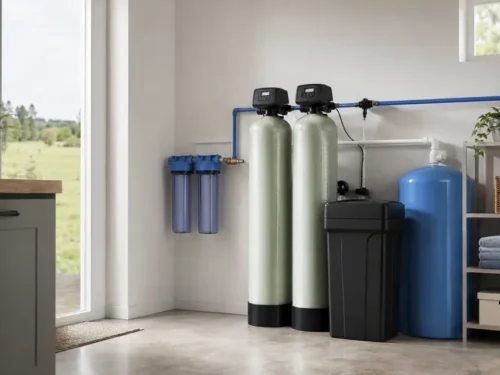
A properly sized softener can reduce hardness minerals and help limit scale formation. Many homeowners also notice that soaps and detergents behave differently once hardness is reduced.
However, equipment selection matters. Household size, water usage, hardness levels, and regeneration requirements should all be considered.
Some modern systems are designed with efficiency in mind, using controls that adjust regeneration based on actual water use instead of following a simple fixed schedule.
Choosing a Softener Isn’t Just About the Price
A lower purchase price can look attractive at first, but the long-term picture matters more.
Consider water consumption, salt or media requirements, maintenance, installation, warranty coverage, and the availability of service. A system that fits your home’s needs can be much more useful than one that simply has the biggest tank or the longest list of features.
For homeowners exploring higher-end equipment, signature series water softners may be worth considering as part of a broader comparison. The important thing is to look at what the equipment actually does and whether those features match your household’s water conditions.
And yes, spelling aside, the right “softener” is the one that solves the actual problem—not the one with the fanciest brochure.
Don’t Ignore Unusual Odors
Water that smells unusual can make an otherwise comfortable home feel a little off.
A sulfur-like or rotten-egg smell may have different causes depending on whether the issue appears in hot water, cold water, or both. Chlorine odors can also affect how people perceive drinking water.
Rather than masking an odor with another product, it’s better to identify its source. Sometimes the solution involves filtration, while other situations may require inspection of the water heater, plumbing, or well system.
The details matter.
Volatile Organic Compounds Deserve Attention Too
Some homeowners focus heavily on hardness and forget that water quality can involve completely different categories of contaminants.
Volatile organic compounds, often called VOCs, can enter groundwater from a range of sources. Not every home has the same exposure risk, but if testing indicates VOC concerns, specialized treatment may be appropriate.
This is where equipment designed for particular contaminants can become important.
For example, a voc guard type of treatment approach may be considered when volatile organic compounds are identified as a concern. The exact technology should be selected according to the contaminants present, their concentrations, and the water source.
In other words, don’t buy a system simply because its name sounds like it handles everything. Look at the test results.
Whole-Home and Drinking Water Treatment Have Different Jobs
There’s also an important difference between treating water throughout the home and treating water specifically for drinking.
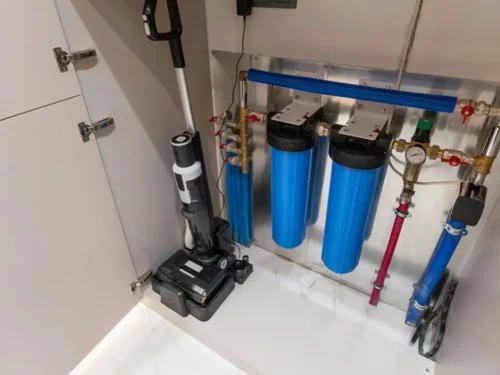
Whole-home systems can address issues before water reaches showers, appliances, sinks, and other fixtures. Point-of-use systems, on the other hand, focus treatment where drinking and cooking water is used.
Sometimes a combination makes sense. A household might use a softener for hardness while adding a dedicated drinking-water system in the kitchen.
That approach can be more practical than trying to make one piece of equipment handle every possible water concern.
Maintenance Is Where Good Equipment Proves Its Worth
Even excellent treatment equipment needs attention.
Filters have replacement schedules. Media can eventually become exhausted. Salt-based systems need supplies. Electronic controls and valves may need occasional inspection.
Skipping maintenance can gradually reduce performance, often without creating an obvious warning sign.
Keeping a simple maintenance calendar helps. Write down installation dates, filter changes, service visits, and test results. It’s not glamorous, but it makes managing a water treatment system much easier.
Better Water Doesn’t Have to Be Complicated
The best approach to household water quality is usually fairly straightforward: understand the source, identify the problem, test when necessary, and select equipment that addresses that specific issue.
You don’t need to chase every new water-treatment gadget that appears on the market. You need a solution that fits your home, your water, and your everyday habits.
After all, the real measure of better water isn’t how impressive the equipment looks in the utility room. It’s how little you have to think about water once everything is working properly.
That’s when good water treatment starts doing its job quietly—and that’s probably exactly how it should be.