Cleaner Water Throughout the House: Choosing the Right Treatment Approach
Most people don’t think about their home’s water until it starts acting differently. A glass of water might have a faint taste.…
Most people don’t think about their home’s water until it starts acting differently. A glass of water might have a faint taste. The shower leaves behind spots. Maybe there’s sediment in the bottom of a sink or an odor that wasn’t there a few months ago. None of these things necessarily mean there’s a serious problem, but they’re worth paying attention to.
Water quality is influenced by its source, plumbing, local conditions, and the minerals or other substances it picks up along the way. That’s why choosing a treatment system should be less about buying the most impressive equipment and more about understanding what your household actually needs.
Start With a Water Test
Before installing anything, find out what’s in the water. This sounds obvious, yet it’s one of the steps homeowners skip most often.
A proper water test can provide useful information about hardness, pH, iron, manganese, sediment, dissolved solids, and other characteristics. Private well owners may need broader testing depending on local conditions, while municipal water users can also benefit from testing when taste, odor, staining, or other changes appear.
The results give you a starting point. Without them, selecting a filter can become guesswork. You might spend money treating a problem you don’t have while overlooking the one you actually do.
When Whole-House Treatment Makes Sense
If water quality concerns affect showers, laundry, appliances, cooking, and drinking—not just one faucet—it may be worth considering treatment at the point where water enters the house.
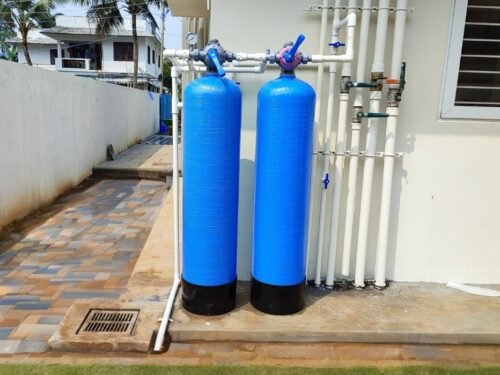
A properly designed whole-home filtration system can help address certain contaminants or unwanted characteristics throughout the property rather than treating water only at one tap. The exact equipment depends on what testing reveals. Sediment, chlorine, iron, odors, and other concerns each call for different approaches.
This can be especially useful in a busy household where water is being used constantly. Nobody wants to install a small point-of-use filter and then realize the shower, washing machine, and water heater are still dealing with the same underlying issue.
Not Every Filter Does the Same Job
One of the confusing parts of water treatment is that “filter” can mean many different things.
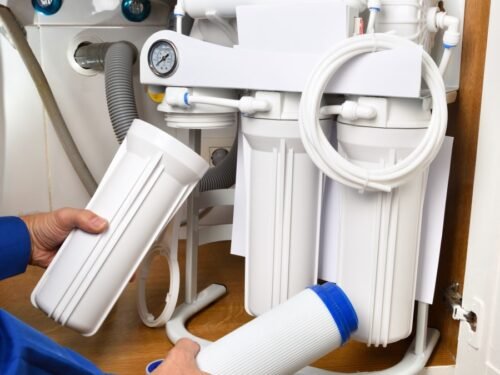
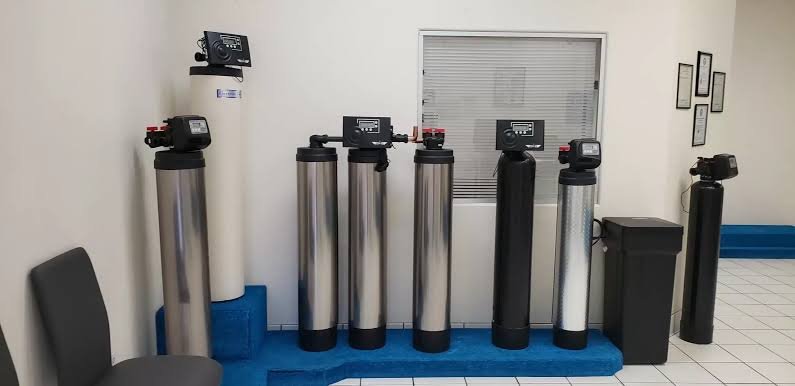
Sediment filters are designed to capture physical particles. Carbon filtration can help with certain tastes, odors, and chlorine-related concerns. Water softeners address hardness minerals, while reverse osmosis is designed to reduce a broad range of dissolved substances from treated water at a specific point of use.
The important distinction is that these technologies aren’t interchangeable. A filter designed for sediment isn’t going to solve every dissolved-water issue, and a softener isn’t intended to remove every contaminant.
Think of treatment equipment as a toolbox. You need the right tool for the particular job.
UV Treatment Has a Different Purpose
Water can look perfectly clear and still require attention from a microbiological standpoint, particularly in some private-well situations.
Ultraviolet treatment uses UV light to inactivate microorganisms as water passes through the system. It doesn’t work by simply “filtering out” organisms, and it doesn’t solve every water-quality issue. That’s why pre-filtration and system design matter.
Depending on the water source and test results, uv disinfection & specialty filters may become part of a customized treatment setup. Specialty filtration can be selected for particular concerns rather than forcing one piece of equipment to handle everything.
For well owners especially, professional testing is the sensible first move. You want to know what you’re dealing with before deciding whether UV or another treatment technology belongs in the system.
Protecting Your Plumbing and Appliances
Water quality isn’t only about drinking water.
Hardness and sediment can affect water heaters, dishwashers, washing machines, faucets, showerheads, and other fixtures. Over time, mineral buildup can restrict flow and make cleaning more frustrating than it needs to be.
A good treatment plan can reduce some of these problems and potentially help water-using appliances operate more efficiently. That doesn’t mean treatment equipment eliminates every maintenance task, of course. Appliances still need cleaning, flushing, inspection, and replacement when their parts wear out.
But reducing the amount of unwanted material moving through your plumbing is a reasonable place to start.
Installation Matters More Than People Think
Even high-quality equipment can perform poorly when it’s incorrectly sized or installed.
Water flow rate, household demand, incoming pressure, pipe configuration, drainage requirements, and available space all matter. A system that works beautifully for a two-person household may not be the best choice for a larger family with several bathrooms.
Installation also involves practical details that aren’t obvious from a product description. Where should the equipment go? How will filters be accessed? Is there adequate drainage? Can the system be serviced without turning the whole house into a temporary construction zone?
These questions may sound mundane, but they matter on a Tuesday morning when someone needs to change a filter before leaving for work.
Plumbing and Water Treatment Often Overlap
Water-treatment equipment becomes part of the home’s plumbing infrastructure. That means installation and repairs shouldn’t always be treated like a simple DIY filter change.
If connections need to be modified, pipes relocated, valves replaced, or drainage added, licensed plumbing services can provide the technical expertise needed to complete the work properly. Professional plumbing support can also be valuable when an existing treatment system is leaking, losing pressure, or causing unexpected changes in water flow.
The goal isn’t to make every water-quality issue sound complicated. It’s knowing when a straightforward maintenance job has turned into a plumbing project.
Don’t Forget Ongoing Maintenance
Water treatment is not a “set it and forget it” investment.
Filters have service lives. UV lamps and components require attention. Softener systems need proper settings and routine care. Reverse osmosis systems have filters and membranes that eventually need replacement.
A neglected system may gradually lose performance without making much noise about it. You might simply notice that the water doesn’t taste as good or that an old problem has quietly returned.
Keeping a basic maintenance schedule helps prevent that. Write down filter-change dates, follow the manufacturer’s recommendations, and have the system checked when something seems unusual.
A Smarter Way to Choose
There’s no universal water-treatment system that makes sense for every house. The right choice depends on the water source, test results, household needs, budget, available space, and the problems you’re actually trying to solve.
Start with testing rather than assumptions. Then consider whether you need point-of-use treatment, whole-house filtration, UV disinfection, softening, or a combination of technologies.
Good water treatment isn’t about filling a utility room with equipment. It’s about solving the right problem with the right solution.
Once that idea becomes the starting point, the process gets much easier. You’re no longer shopping for a filter because the box looks convincing. You’re choosing a system because you understand your water—and that’s a much better reason to buy anything.