When Your Water Needs More Than a Simple Filter
There’s something oddly reassuring about turning on a tap and trusting what comes out. Most of us do it without a second…
There’s something oddly reassuring about turning on a tap and trusting what comes out. Most of us do it without a second thought. Fill the kettle, rinse the vegetables, pour a glass, move on with the day. But when water starts tasting unusual, leaving spots on dishes, smelling strange, or affecting appliances, that easy confidence can disappear pretty quickly.
The tricky part is figuring out what the water actually needs. A filter that works beautifully for one home might do very little for another. Water quality varies according to the source, plumbing, local conditions, and, in the case of private wells, what is happening underground. Good treatment starts with understanding the problem instead of buying the first system that looks promising.
Start With a Clear Picture of Your Water
Before choosing equipment, have the water evaluated. A professional test can reveal characteristics that aren’t obvious from appearance alone. Hardness, acidity, iron, sediment, dissolved minerals, and other contaminants may all influence which treatment approach makes sense.
This is particularly important for households using private wells. Well water can look perfectly clear and still contain substances that affect taste, staining, plumbing, or household use. Testing provides a useful baseline and makes it easier to decide whether treatment is necessary, and if so, what kind.
It also prevents a common mistake: treating symptoms without understanding their cause.
When Reverse Osmosis Makes Sense
For households looking to improve drinking and cooking water, reverse osmosis systems can be an effective option. These systems use pressure to push water through a semipermeable membrane, reducing many dissolved substances and producing highly treated water.
They’re often installed under a kitchen sink, where treated water is available from a dedicated faucet. That setup can be useful because you don’t necessarily need to treat every gallon entering the house to improve the water you drink.
Of course, reverse osmosis isn’t a cure-all. The membrane and other filtration stages have specific capabilities, and the system needs to be correctly sized and maintained. There can also be some water waste depending on the equipment and its efficiency. In other words, it’s worth looking at the whole system rather than focusing on the membrane alone.
Don’t Overlook Private Well Water
A private well changes the conversation somewhat. Municipal supplies are generally monitored and treated before distribution, while private well owners are responsible for understanding and maintaining their own water supply.
That makes well water treatment less about choosing a trendy piece of equipment and more about responding to actual conditions. Iron, sulfur-related odors, sediment, hardness, bacteria, and other issues can occur, but they don’t all require the same solution.
For example, a metallic taste and orange staining may point toward iron, while a rotten-egg odor can have a very different cause. A cloudy appearance could involve sediment, plumbing issues, or something else entirely. Guessing can get expensive.
Testing should therefore be the first step, especially when water quality has changed suddenly.
What About Hard Water?
Hard water is one of the most familiar household water problems. Calcium and magnesium are the main minerals involved, and while hardness isn’t automatically dangerous, it can certainly be annoying.
White scale around faucets is a classic sign. You might also notice spots on shower doors, reduced efficiency in water heaters, or soap that seems strangely reluctant to rinse away. Nobody enjoys scrubbing mineral deposits off a faucet every Saturday morning.
A water softener can reduce hardness by exchanging calcium and magnesium ions for other ions, typically sodium or potassium. The result is water that behaves differently around plumbing and household surfaces.
The right setup depends on water hardness, household size, daily consumption, and other factors. Bigger isn’t automatically better.
Filtration Is About Matching the Problem
There is a tendency to think of “a water filter” as one universal product. In reality, filtration technologies have different jobs.
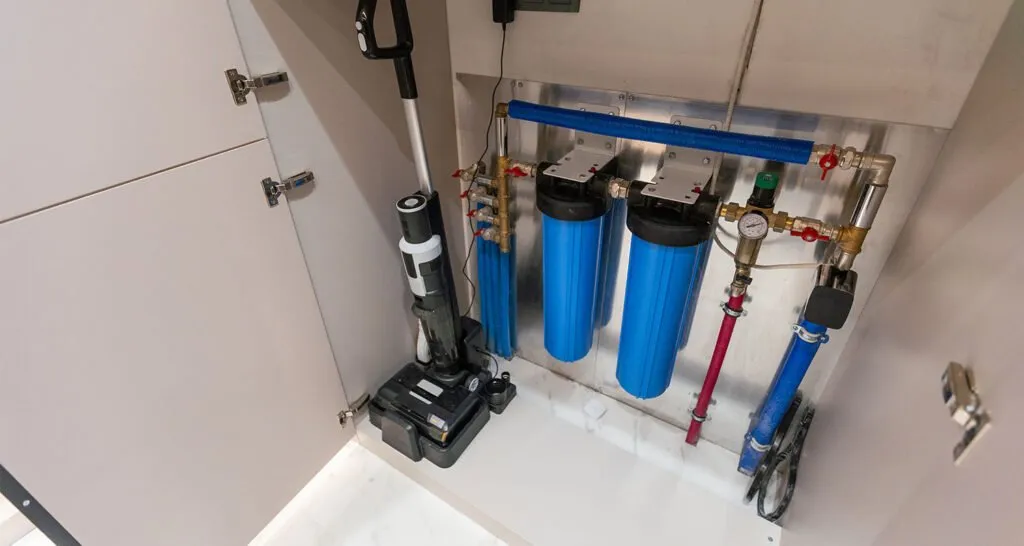
Sediment filters are designed to capture particles. Activated carbon is commonly used to reduce chlorine and improve taste and odor. Specialized media may target iron, manganese, sulfur compounds, or other specific concerns.
This is why combination systems are sometimes used. One stage handles sediment, another addresses taste or odor, and another tackles a particular contaminant. The arrangement should be based on test results rather than a long list of impressive-sounding features.
A simpler system that solves the actual problem is usually preferable to a complicated one that doesn’t.
Consider How the Water Is Used
Not every water-quality concern requires whole-house treatment. Think about where the problem matters most.
If your main complaint is drinking-water taste, an under-sink system might be enough. If hard water is affecting showers, laundry, appliances, and plumbing throughout the house, treatment at the point where water enters the property may make more sense.
Household habits matter too. A family of six will place different demands on a system than someone living alone. A home with several bathrooms and high water consumption needs equipment that can keep up without creating frustrating pressure or flow problems.
These practical details are easy to overlook when comparing products online.
Maintenance Isn’t Optional
A treatment system is not something you install once and forget about forever. Filters become saturated. Membranes eventually need replacement. Tanks and components may require inspection. Settings can drift, and equipment can develop problems just like anything else mechanical.
That’s where ongoing maintenance services can make ownership much easier. Regular inspections and timely filter changes can help keep equipment operating as intended, while professional attention can catch small problems before they become expensive repairs.
Maintenance schedules vary by system and water conditions, so follow the manufacturer’s recommendations and pay attention to changes in performance. A sudden drop in pressure, unusual taste, strange noises, or a change in water appearance shouldn’t simply be ignored.
Think Beyond the Initial Price
It’s natural to compare systems by purchase price. But the cheapest option isn’t necessarily the least expensive over five or ten years.
Look at replacement filters, membrane costs, electricity or water consumption where applicable, service requirements, installation, and expected equipment life. Ask whether parts are readily available and whether someone can service the system if something goes wrong.
A reliable system with predictable maintenance can be a better investment than a bargain product that becomes difficult to support later.
The Best Water Treatment Is the One That Fits
There isn’t a single treatment system that is right for every household. That’s actually good news. It means homeowners don’t need to buy every piece of equipment available just to feel confident about their water.
Start with testing. Identify the concern. Consider how the water is used, then choose technology that addresses the specific issue. If the source is a private well, keep testing on an appropriate schedule and stay aware of changes.
Water quality isn’t something that needs to become an obsession. But it deserves a little attention. Once you know what’s in your water and what you want to improve, the path forward becomes much clearer. And sometimes, the best solution is refreshingly simple.