
Understanding Water Filtration Options for Cleaner, Better-Tasting Water
Water plays a quiet but important role in everyday life. We drink it, cook with it, wash clothes in it, and rely…
Water plays a quiet but important role in everyday life. We drink it, cook with it, wash clothes in it, and rely on it for showers, cleaning, and countless small routines. Yet many homeowners don’t give much thought to their water until they notice an unpleasant taste, mineral buildup, or an unusual smell coming from the tap.
Choosing the right water treatment equipment can make a noticeable difference, but the process isn’t simply about buying the most expensive system available. Different technologies address different concerns. Understanding how they work—and where they fit in a home—can help you make a more practical decision.
Why Water Quality Deserves Attention
Water quality can vary depending on whether a home receives municipal water or relies on a private well. Even treated public water may develop taste or odor issues as it travels through plumbing, while well water can contain naturally occurring minerals, sediment, or other substances that affect its appearance and performance.
Some signs are easy to recognize. White spots on faucets may indicate hard water. A chlorine-like smell can affect the drinking experience. Persistent odors, staining, or cloudy water may suggest that further testing is worthwhile.
It’s important not to treat every visible issue as a health emergency, though. Some problems are mainly about comfort and appliance maintenance, while others require more specific investigation. Testing helps separate the two.
The Role of Water Testing
Before selecting a filtration or treatment system, homeowners should understand what is actually present in their water. A professional water test may examine factors such as hardness, pH, iron, sediment, chlorine, and other contaminants relevant to the local water source.
The right test depends on the concern. Someone dealing with scale buildup may need hardness testing, while a homeowner worried about a particular contaminant should request a test designed to detect it. A basic test doesn’t automatically cover everything.
Once the results are available, they can guide the equipment selection. This prevents a common mistake: installing a system that sounds impressive but doesn’t address the actual problem.
How Reverse Osmosis Water Filters Work
Reverse osmosis water filters are commonly used when homeowners want to improve the quality of their drinking and cooking water. The process pushes water through a semi-permeable membrane that reduces many dissolved substances and impurities.
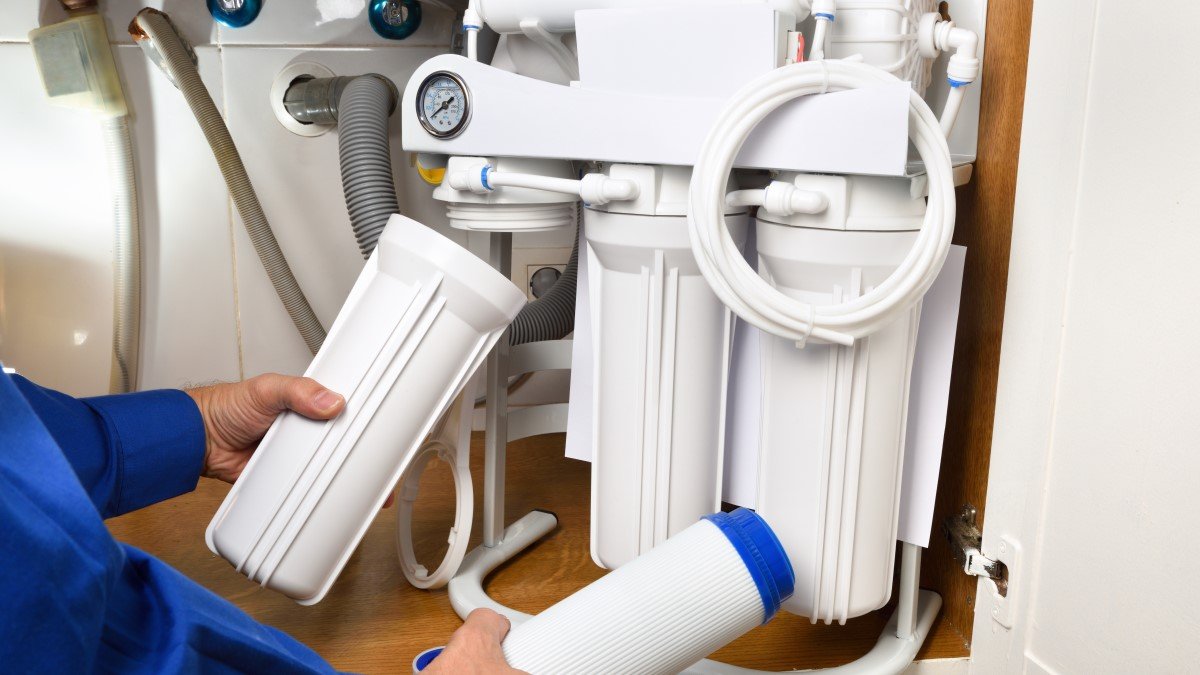
Most reverse osmosis systems are installed at a point of use, such as beneath the kitchen sink. They often include several stages, including sediment filtration, carbon filtration, and the RO membrane itself. Some systems also add a final polishing filter or remineralization stage.
RO can be useful for reducing certain dissolved contaminants, but it isn’t a universal answer to every water issue. It also produces some wastewater and requires regular replacement of filters and membranes. Homeowners should check the system’s specifications and understand exactly what it is certified or designed to reduce.
Whole-House Filtration for Everyday Convenience
For households that want treated water available from multiple taps, whole-house filtration may be worth considering. These systems are installed on the main water line, allowing water to be filtered before it reaches showers, bathrooms, laundry areas, and kitchen fixtures.
The benefits depend heavily on the filter media. Carbon-based systems are often used to improve taste and reduce chlorine-related odors. Sediment filters can help capture particles, while specialized media may target particular contaminants.
A whole-house system should be sized correctly for the property’s water flow and household demand. If the filter is too restrictive, it may affect water pressure. If it is undersized, it may not perform effectively for the home’s usage.
It’s also worth asking about filter replacement intervals. A system that is easy to maintain is generally more useful than one that becomes a burden after installation.
When Water Softeners Make Sense
Water softeners are designed primarily to address hard water caused by minerals such as calcium and magnesium. These minerals can create scale inside pipes and appliances, leave residue on glassware, and make soap less effective.
Most traditional softeners use ion exchange to reduce hardness. During the process, calcium and magnesium are exchanged for sodium or potassium ions. The result is water that is less likely to create mineral deposits throughout the home.
A softener can be especially helpful when homeowners notice frequent scale around faucets, stiff-feeling laundry, or reduced efficiency in water-using appliances. However, it is important to remember that softeners are not intended to remove every contaminant. They solve a specific problem rather than acting as a complete filtration system.
Filtration and Softening Are Not the Same
One of the most common sources of confusion is the assumption that a water filter and a water softener do the same thing. They don’t.
A filter generally targets particles, chemicals, odors, or specific contaminants, depending on its design. A softener focuses on hardness minerals. In some homes, both may be useful because the water has more than one issue.
For example, a household might install a softener to reduce scale and use a carbon filter to improve taste and odor. Another home may need an RO system for drinking water but no whole-house treatment at all. The best combination depends on the water analysis and the homeowner’s priorities.
Considering Installation and Maintenance Costs
The purchase price is only one part of the overall cost. Homeowners should also consider installation, replacement filters, salt or potassium requirements, electricity where applicable, and periodic servicing.
Ask the installer how much space the equipment needs and whether it can be installed near the main water entry point. Some systems require a drain connection, a power outlet, or changes to existing plumbing. These details can affect the final cost and installation timeline.
Maintenance should be straightforward and clearly explained. If replacement parts are difficult to find or servicing is unusually expensive, the system may become frustrating over time.
Choosing a System That Fits Your Home
A good water treatment decision begins with a simple question: What problem are you trying to solve?
If the issue is hard water, a softener may be appropriate. If the concern is chlorine taste or sediment, a filtration system could be more relevant. If drinking-water quality is the priority, reverse osmosis may offer a targeted solution.
Avoid choosing equipment solely because it is marketed as the “best” or “most advanced.” Look for clear performance information, appropriate certifications, realistic maintenance requirements, and a provider willing to explain both the benefits and limitations.
Final Thoughts
Water treatment doesn’t have to be confusing. Once you understand your water quality and the purpose of each technology, the choices become much clearer.
Reverse osmosis, whole-house filtration, and water softeners each serve different roles. The right system is the one that addresses your home’s actual needs without adding unnecessary complexity or expense.
With proper testing, professional guidance, and regular maintenance, homeowners can enjoy water that tastes better, causes fewer household problems, and supports a more comfortable daily routine. Sometimes, the most valuable improvement is simply knowing what’s coming out of your tap—and knowing what to do about it.


