Making Sense of Home Water Treatment: What Your Water Really Needs
Most people don't think much about their home's water until it starts behaving strangely. A glass of tap water tastes different. The shower leaves spots on…
Most people don’t think much about their home’s water until it starts behaving strangely. A glass of tap water tastes different. The shower leaves spots on the door. Soap seems to disappear without actually getting anything clean. Maybe there’s a faint smell that wasn’t there before. These little annoyances can become surprisingly hard to ignore.
The good news is that water treatment doesn’t have to be complicated. There are several technologies available today, but they each solve different problems. The trick is figuring out what your water actually needs rather than buying equipment simply because it has a long list of features.
Begin With the Water You Have
Before choosing a treatment system, it’s worth finding out what’s actually in your water. Municipal supplies are routinely monitored, but water quality can still vary based on plumbing, seasonal conditions, the local source, and the age of a home’s pipes. Private wells can introduce even more variables.
A proper water test provides useful information about hardness, pH, minerals, sediment and other characteristics. It gives you something concrete to work with. Without testing, homeowners sometimes end up treating a problem they don’t have while overlooking the one they do.
There’s also a practical benefit here. Understanding your water makes conversations with installers much easier. Instead of saying, “My water tastes weird,” you can discuss a specific water-quality issue and possible solutions.
Conditioning Is About More Than Taste
Water treatment is a broad term. It can include filtration, softening, disinfection and specialized processes designed to address particular contaminants or characteristics.
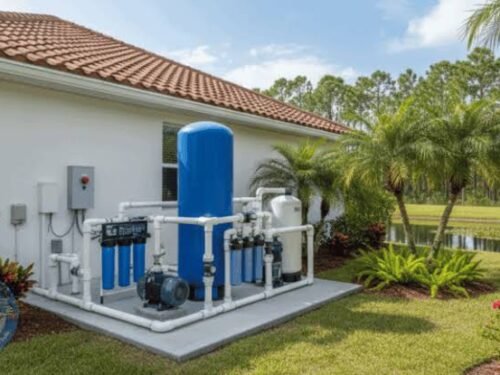
For households dealing with several concerns at once, water conditioning & refining may provide a more comprehensive approach. Depending on the system, conditioning can help address hardness, improve certain aesthetic qualities and prepare water for additional treatment stages. The exact configuration should be based on test results, household needs and the source water.
This is important because there isn’t a universal “best” treatment system. A family using well water may have completely different requirements from someone living in a newer home with a municipal supply. What works beautifully next door might be unnecessary in your kitchen.
Hard Water Can Be a Quiet Household Nuisance
Hard water doesn’t always announce itself dramatically. Instead, it leaves clues.
White mineral deposits may appear around faucets. Glass shower doors become difficult to keep clear. Laundry can feel less soft, and water heaters may develop scale over time. If you’ve ever scrubbed a faucet only to see those chalky marks return a few days later, you know how frustrating it can be.
Treating hardness can help reduce those deposits and make everyday cleaning easier. It may also help protect water-using appliances from excessive scale. But hardness treatment isn’t the same thing as purification, so it’s important to understand exactly what a particular system is designed to do.
When Disinfection Becomes Important
Filtration and disinfection aren’t interchangeable. Filtration generally focuses on physically reducing particles or specific substances, while disinfection is intended to control microorganisms.
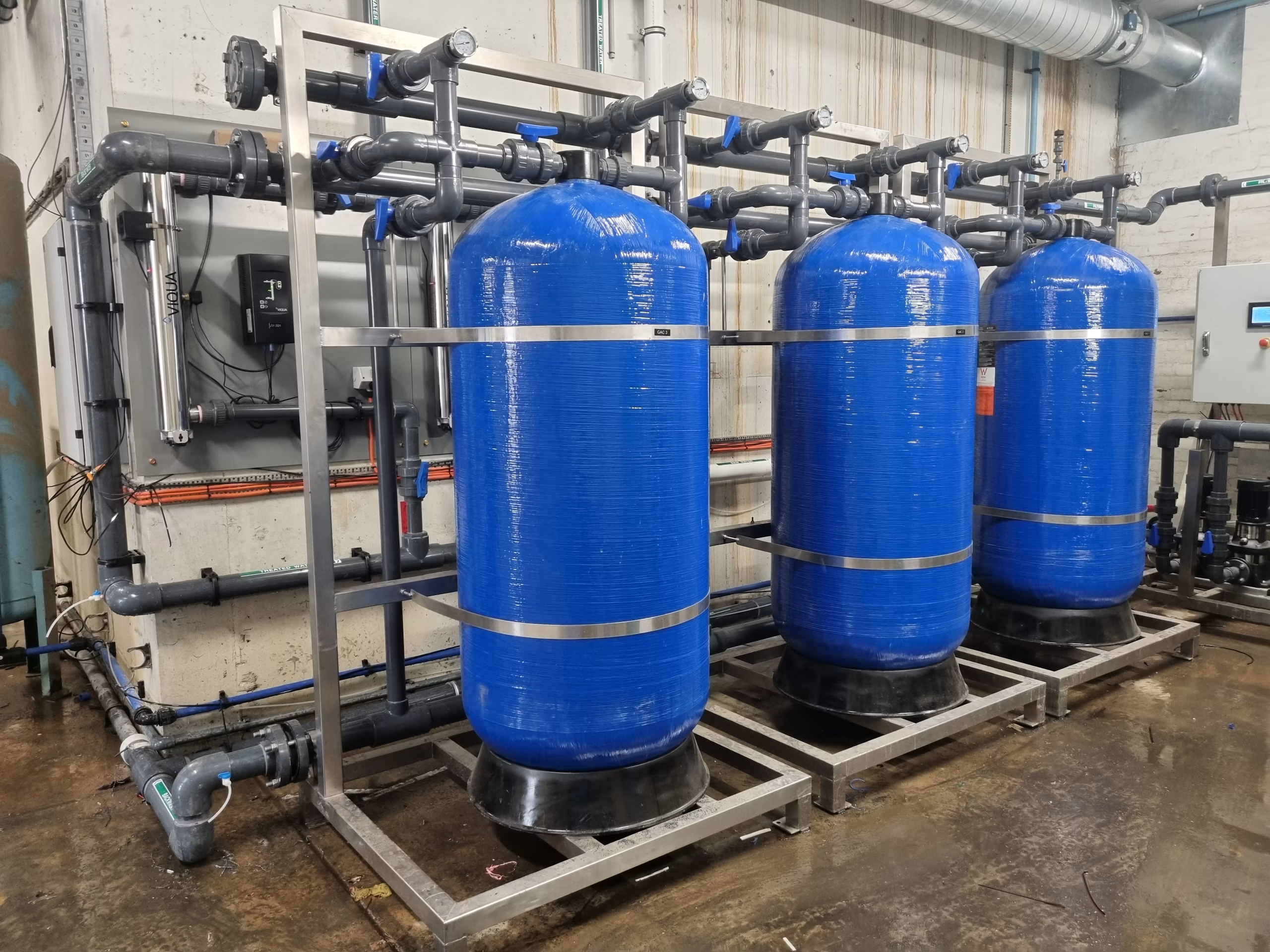
For certain properties and water sources, uv / ozone disinfection can be part of a broader treatment strategy. Ultraviolet technology uses UV energy to inactivate microorganisms as water passes through the treatment chamber. Ozone works differently, using an oxidizing process. Each technology has its own operating requirements, advantages and limitations.
For homeowners considering disinfection, professional system design matters. Flow rate, water clarity, maintenance and the condition of the incoming water can all influence how well a system performs. A UV unit, for example, typically works best when the water is sufficiently clear for the UV light to reach microorganisms effectively.
Don’t Forget About Drinking Water
Whole-house treatment and drinking-water treatment don’t necessarily have to be the same thing.
Some homeowners want treated water throughout the house but prefer an additional level of filtration at the kitchen sink. Others mainly care about improving the taste and appearance of the water they drink and use for cooking.
Point-of-use systems can make sense in those situations. Depending on the water chemistry and treatment objective, options may include activated carbon filtration, reverse osmosis or other specialized technologies.
The right choice comes down to the reason you’re treating the water. If the goal is simply better taste, a complex system may be overkill. If you’re trying to reduce a specific dissolved substance, a more advanced treatment process might be appropriate.
A Softer Approach Without Traditional Salt
Not every homeowner likes the idea of keeping bags of salt around for a water-treatment system. That’s understandable. Salt storage, replenishment and system maintenance can become another household chore.
That’s one reason salt-free systems have attracted attention. Depending on the technology, these systems may condition water to reduce the tendency of minerals to form scale rather than removing hardness minerals in the same way a traditional ion-exchange softener does.
That distinction is worth knowing before making a purchase. A salt-free conditioner shouldn’t automatically be described as equivalent to a conventional softener. They work differently, and expectations should match the technology.
If reducing scale is the primary goal, a salt-free approach may be worth discussing. If the objective is actually to remove hardness from the water, another type of treatment may be more suitable.
Maintenance Is Where Good Systems Prove Their Worth
Even an excellent water-treatment system needs attention. Filters don’t last forever, membranes eventually need replacement, UV lamps have service intervals, and other components can require cleaning or inspection.
The maintenance schedule doesn’t have to be burdensome, but it should be understood before installation. Ask what needs replacing, how often it should happen and whether the required parts are easy to obtain.
A neglected system can gradually lose performance. That’s especially frustrating when the homeowner assumes everything is still working because the equipment is sitting quietly in the utility room.
Consider the Whole Household
Water treatment should fit the way your household actually lives.
A couple with two bathrooms may have very different flow requirements from a large family with several showers, a soaking tub and frequent laundry. The available installation space matters too. Drainage, plumbing connections and electrical requirements can affect which systems are practical.
It’s also worth thinking about future needs. If you’re remodeling, adding a bathroom or finishing a basement, mention those plans before the equipment is selected. Good planning now can prevent an awkward retrofit later.
A Little Research Can Save a Lot of Trouble
The best water-treatment decision isn’t necessarily the one with the newest technology or the biggest equipment cabinet. It’s the one that addresses a real problem without creating unnecessary expense or maintenance.
Start by testing the water. Identify the main concerns. Then compare technologies based on what they actually do, not just how impressive their marketing sounds.
Clean, pleasant water is one of those home improvements you notice every single day, even when you don’t consciously think about it. The shower feels better. The coffee tastes cleaner. The sink doesn’t look like it needs constant scrubbing.
And perhaps that’s the real goal of thoughtful water treatment: not making your home feel like a laboratory, but simply making an everyday part of life work a little better.