Finding the Right Balance Between Filtration and Water Softening
Water has a funny way of becoming part of the background. We turn on the tap, fill a glass, take a shower,…
Water has a funny way of becoming part of the background. We turn on the tap, fill a glass, take a shower, wash the dishes, and rarely stop to think about what is actually moving through the pipes. That changes when the water starts leaving spots on the sink, tasting odd, smelling unusual, or making soap feel strangely ineffective.
Those little signs don’t always mean there’s a serious problem. But they can be clues that your home’s water quality could use a closer look. The good news is that improving household water doesn’t have to mean installing every treatment device available. The right approach starts with understanding the water and then choosing technology that addresses the specific issue.
Water Quality Isn’t the Same Everywhere
Two homes a few streets apart can have noticeably different water experiences. Municipal water is treated before it reaches households, but its characteristics can still vary because of the source, treatment methods, plumbing infrastructure, and the condition of a home’s own pipes.
Private wells introduce another layer of uncertainty. Groundwater can contain naturally occurring minerals such as calcium, magnesium, iron, or manganese. Some wells may also have sulfur-related odors or other concerns that require testing.
That’s why assumptions aren’t particularly useful. Before spending money on equipment, it helps to identify what you’re actually trying to fix.
Start With a Simple Water Test
A water test gives homeowners a clearer picture of what is happening. Depending on the type of test, it can measure factors such as hardness, pH, chlorine, iron, total dissolved solids, and other indicators.
Testing is especially valuable when several symptoms appear at once. Suppose your water leaves white deposits around faucets and your water heater seems to collect scale quickly. That points toward hardness. If the water tastes strongly of chlorine but doesn’t have a scaling problem, a different treatment strategy may make more sense.
It sounds obvious, but there’s a lot of value in solving the right problem.
What Filtration Actually Does
The word filtration gets used broadly, sometimes so broadly that it becomes difficult to know what a filter is supposed to accomplish.
In simple terms, filtration is the process of passing water through a medium designed to reduce particular substances. Different filter materials target different things. Activated carbon, for example, is commonly used to improve taste and reduce chlorine and certain organic compounds.
Other filtration technologies are designed for sediment, specific chemicals, iron, or biological concerns. No single filter removes everything, which is why product claims should always be considered alongside actual water-test results.
A filter isn’t automatically better because it has more stages, either. What matters is whether those stages are useful for your water.
When Hard Water Becomes a Household Headache
Hard water is primarily associated with calcium and magnesium. These minerals aren’t generally something homeowners need to panic about, but they can cause plenty of practical frustration.
You might notice cloudy glassware after washing dishes, soap scum in the bathroom, or mineral deposits around fixtures. Hot-water appliances can be particularly affected because heating encourages mineral scale to accumulate.
This is where water softeners can play an important role. A conventional water softener uses ion exchange to reduce hardness minerals in the water. In doing so, it can help reduce scale and make everyday cleaning easier.
The right size matters, though. A system designed for a small household may not be appropriate for a large family with heavy water consumption. Sizing should take household demand and water hardness into account.
Softening and Filtering Are Different Jobs
This distinction is worth remembering because it’s one of the easiest things to misunderstand.
A water softener is primarily designed to address hardness. A drinking-water filter may instead focus on taste, chlorine, sediment, or specific contaminants. Installing one does not automatically replace the other.
Think of it like household tools. You wouldn’t use a screwdriver when you need a wrench just because both happen to be sitting in the same toolbox.
Some homes need only a softener. Others benefit from a carbon filter. Some may use both, with each system doing its own job. The appropriate combination depends on the water itself.
Whole-Home Treatment Can Make Sense
If water-quality issues affect showers, laundry, appliances, and drinking water, a point-of-use filter at the kitchen sink may not be enough.
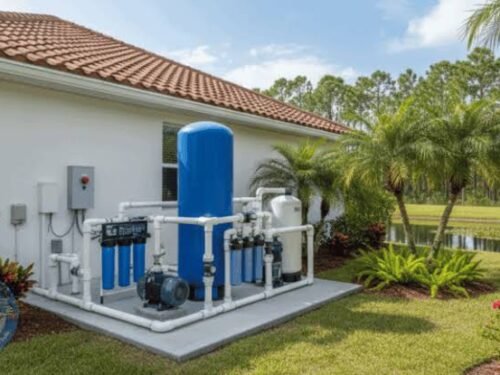
Whole-home treatment places equipment where it can treat water before it travels through the property’s plumbing. This can be useful when the concern affects the entire household supply, particularly with sediment, certain odors, or hardness.
However, whole-house systems should be selected carefully. The equipment needs to handle the home’s flow rate without creating unnecessary pressure loss. It also needs a suitable installation location and an ongoing maintenance plan.
A professional assessment can help avoid the common mistake of buying a system first and figuring out the plumbing afterward.
Maintenance Is Part of the Solution
Water treatment equipment isn’t a “set it and forget it” purchase. Filters need replacement. Some systems require periodic cleaning or servicing. Softener systems may need salt replenishment and routine checks.
Skipping maintenance can gradually reduce performance. A carbon filter that should have been replaced months ago won’t suddenly become more effective because nobody remembered it was there.
Keep track of service intervals and replacement dates. If your water suddenly changes in taste, smell, color, or clarity, don’t simply assume the equipment is working as usual. It may be time for a checkup or another water test.
Choosing a Water Filtration Service
For homeowners who aren’t sure where to begin, a professional water filtration service can simplify the process. A good provider should start by understanding the water issue rather than immediately pushing a particular product.
Ask what the system is designed to remove, how often components need servicing, how much water the system can handle, and what ongoing costs look like. If you’re considering a softener, ask how it will be sized for your household and water hardness.
It’s also reasonable to ask for the test results and recommendations in writing. Clear information makes it easier to compare options without feeling pressured.
Better Water Doesn’t Have to Be Complicated
The best water-treatment setup isn’t necessarily the biggest, newest, or most expensive one. It’s the one that addresses the actual characteristics of your water and fits comfortably into your home’s daily routine.
Start with testing. Pay attention to what you notice around the house. Separate hardness problems from taste and odor concerns, and understand what each treatment technology is designed to do.
Once you have that foundation, choosing equipment becomes much less mysterious. You aren’t simply buying a filter because the packaging looks convincing. You’re making a practical decision based on evidence.
And that’s really the point. Good water treatment should make life easier in the background — cleaner fixtures, better-tasting water, fewer maintenance headaches, and a little more confidence every time you turn on the tap.