What Your Water Quality Can Tell You About the Treatment Your Home Needs
Most people expect water from the tap to be simple. Turn on the faucet, fill a glass, and get on with the…
Most people expect water from the tap to be simple. Turn on the faucet, fill a glass, and get on with the day. But when the water starts tasting odd, leaving chalky marks on dishes, or carrying a smell you can’t quite identify, that assumption quickly disappears.
Water quality problems don’t always announce themselves in obvious ways, either. Some are visible. Others are completely undetectable without proper analysis. And that’s why choosing a treatment system based only on taste, color, or a neighbor’s recommendation can be a bit like buying shoes without knowing your size.
The better approach is to understand your water first, then decide what, if anything, needs to be treated.
Look Beyond Taste and Appearance
A glass of cloudy water naturally gets your attention. So does water with a reddish tint or a strong sulfur-like odor. These signs can point toward particular water-quality issues, but they’re only clues.
Clear water isn’t necessarily problem-free, and water that tastes fine isn’t automatically perfect. Certain substances have no obvious taste, smell, or color. This is particularly important for households using private wells, where the quality of the water depends heavily on local groundwater conditions.
In other words, your senses are useful, but they shouldn’t be the entire investigation.
Testing Gives You a Starting Point
Before investing in equipment, water testing can help reveal what’s actually happening inside your water supply. A quality test may evaluate factors such as hardness, pH, minerals, metals, bacteria, and other characteristics depending on the type of analysis performed.
That information matters because different problems call for different solutions.
For example, water that’s hard because of elevated calcium and magnesium may benefit from softening. Sediment may call for filtration. Certain dissolved substances may require a more specialized purification method.
Without testing, it’s easy to solve the wrong problem.
Hard Water Is More Than a Cosmetic Nuisance
Hard water is one of those issues people often notice gradually. First there’s a little white residue around the faucet. Then the shower door becomes harder to keep clean. Eventually, appliances may develop mineral buildup.
The problem isn’t simply that the water looks untidy.
Hard water can interfere with soap performance and contribute to scale inside plumbing and appliances. Water heaters, dishwashers, washing machines, and other equipment may be affected by mineral deposits over time.
A treatment strategy aimed at hardness can make everyday household maintenance easier, especially when the issue affects the entire property.
When Reverse Osmosis Makes Sense
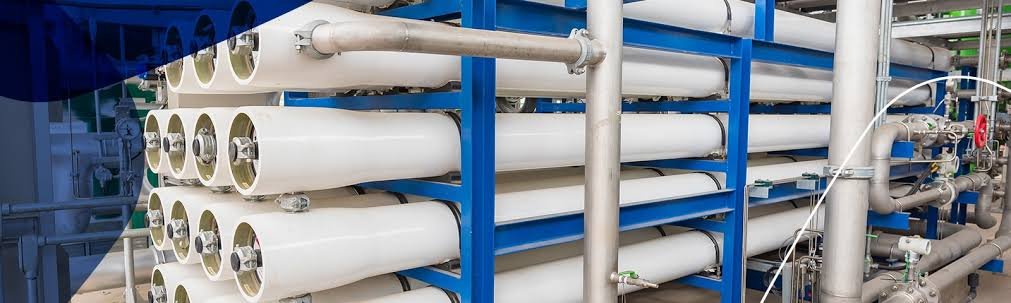
For homeowners looking for highly treated drinking water, reverse osmosis is a technology worth understanding. It uses pressure to move water through a semipermeable membrane, reducing many dissolved substances and impurities in the process.
A reverse osmosis system is often installed at a kitchen sink, making it convenient for drinking and cooking water. Depending on the home’s water quality and system design, it can provide an additional level of purification where it’s most useful.
But it’s not a universal solution.
If the main issue is whole-house hardness, installing reverse osmosis at the kitchen sink won’t address scale in the shower or water heater. Likewise, if sediment is entering the property, a prefiltration step may be necessary to protect downstream equipment.
The technology is powerful. The trick is using it for the right job.
Private Wells Deserve Extra Attention
People with private wells don’t have the same centralized treatment infrastructure as households connected to a municipal supply. That makes routine awareness especially important.
Changes in groundwater conditions, heavy rainfall, flooding, construction, agricultural activity, or problems with the well itself can potentially influence water quality. A sudden change in taste or appearance shouldn’t simply be brushed aside.
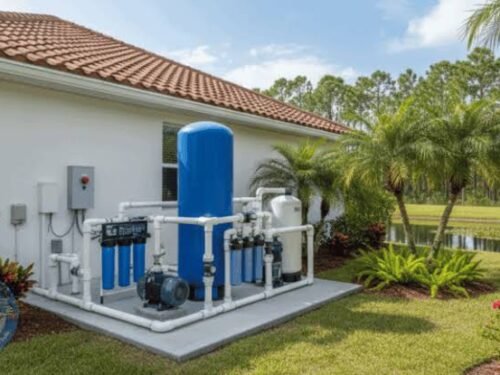
Effective well water treatment starts with identifying the specific characteristics of the water. One household may need sediment removal and softening, while another might need iron treatment or disinfection.
There’s no one-size-fits-all recipe, and honestly, that’s a good thing. Treatment should respond to the water rather than forcing the water to fit a preselected system.
Think About Where the Problem Occurs
One useful question is whether the water issue affects the entire house or mainly one point.
If every faucet has the same odor, staining, or hardness problem, whole-home treatment may be appropriate. Treating water as it enters the house allows multiple fixtures and appliances to benefit.
But if your primary concern is the quality of drinking and cooking water, point-of-use treatment can be a sensible option. It focuses treatment where you actually consume the water instead of treating every gallon used for laundry or bathing.
The right choice depends on both the problem and the household’s priorities.
Don’t Ignore Sediment and Mechanical Issues
Small particles in water may seem harmless, but they can create practical headaches. Sediment can collect in faucet aerators, valves, appliances, and treatment equipment. Over time, it can affect water flow and contribute to maintenance problems.
A properly selected sediment filter can capture suspended particles before they move deeper into the plumbing system.
Still, filtration should be chosen according to particle size and water conditions. A filter designed for sediment isn’t expected to remove every dissolved contaminant. That’s why understanding the complete water profile is so useful.
Maintenance Keeps Treatment Working
Even a well-designed treatment system needs attention.
Filters eventually become loaded. Membranes require replacement. Tanks and other components may need inspection or sanitation. Skipping maintenance can reduce performance and sometimes create new problems.
The good news is that most routine maintenance isn’t particularly dramatic. Keep a schedule, know which components need servicing, and pay attention to changes in pressure, taste, odor, or water flow.
If something suddenly feels different, that’s worth investigating.
Don’t Buy More Treatment Than You Need
Water treatment can become confusing because there are so many products promising better water. Bigger isn’t necessarily better, though.
An oversized system may cost more to purchase and maintain without providing a meaningful advantage. On the other hand, a system that’s too small may struggle to keep up with household demand.
The goal should be balance. Choose equipment based on water conditions, household size, daily usage, available space, and long-term maintenance requirements.
It’s a little less exciting than buying the fanciest system on the shelf, but it’s usually much smarter.
A Clearer Way Forward
Good water treatment isn’t about chasing every possible contaminant or turning your home into a laboratory. It’s about understanding what’s present and responding sensibly.
Pay attention to changes. Have the water evaluated when appropriate. Consider how the issue affects your household, not just how it looks in a glass. Then choose treatment technology that addresses the actual concern.
Sometimes the answer is simple filtration. Sometimes it’s softening or disinfection. In other situations, a purification system such as reverse osmosis may be useful.
Whatever the solution, the most important step is the one that happens before the equipment arrives: knowing what your water needs.
When that part is done properly, cleaner, better-tasting water becomes less of a guessing game and more of a practical household decision.